n
Developing a custom 8-bit computer is a rite of passage for digital electronics enthusiasts, but transitioning a complex breadboard prototype to a reliable printed circuit board (PCB) introduces a whole new set of challenges. In her latest video, The Breadboard Apprentice (Sandra) walks us through this exact transition for her homebrew computer’s memory subsystem, detailing everything from address mapping to board routing and physical debugging.
Decoding and Mapping Memory
For any 8-bit system, address decoding is the core logic that ensures the CPU reads from or writes to the correct device. Sandra’s module integrates a generous 32 KB of SRAM (using the classic AS6C62256) and 8 KB of parallel EEPROM (the AT28C64B). To orchestrate chip selection, she implements a 74HCT138 3-to-8 line decoder. This decoder splits the 16-bit address space, allowing the computer to smoothly toggle between volatile working memory and non-volatile startup code.
Wrangling Breadboard Bugs and Edge Connector Bevels
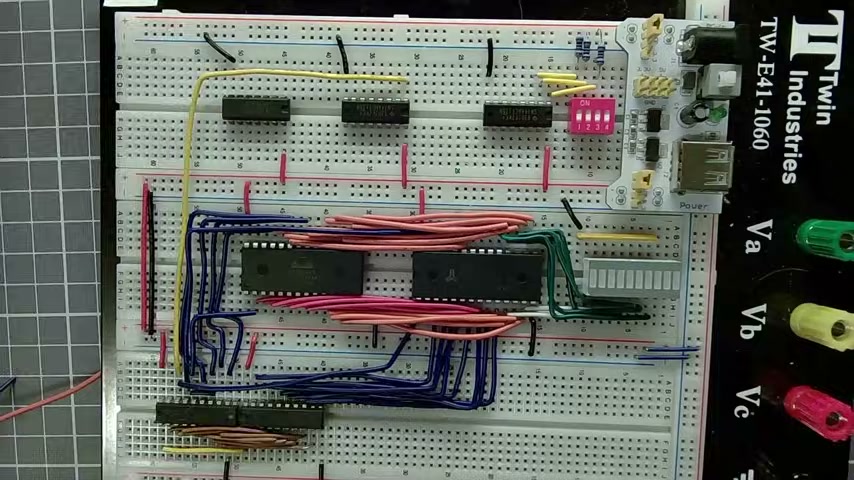
Before committing her circuit to copper, Sandra demonstrates the value of rigorous prototyping. Even with clean layout planning, a mysterious malfunction emerges on the breadboard—eventually traced to a floating address pin. This is a common and highly frustrating issue in breadboard builds where a single loose jumper can simulate random memory corruption.
With the breadboard prototype verified, she shifts the design into KiCad. Designing a plug-in expansion module for a backplane requires careful attention to physical details. Sandra highlights a crucial layout detail: checking and adjusting the edge connector bevel. A proper bevel is essential to ensure that the card slides smoothly into the expansion slots without stripping or damaging the backplane sockets over repeated insertions.
Equipping Your Retro Maker Bench
If you are inspired to build or expand your own custom retro computers or custom 8-bit subsystems, having the right tools is paramount. While Sandra sources high-quality parallel EEPROMs like the AT28C64B, flashing your own custom startup code or BIOS onto these chips is a hurdle for many builders. For a robust, bench-friendly solution, Anders Nielsen’s Relatively Universal ROM Programmer (RURP) is an outstanding open-hardware DIY kit. It gives retro makers full control over programming classic EEPROM and ROM chips, making it the perfect companion for anyone designing custom expansion modules or homebrew computers.
Watch the Full Video
To see Sandra’s design journey from schematic sketch, to breadboard troubleshooting, to assembling the finished custom PCB, watch her complete video below:
Original Video: From Sketch to PCB: Memory for My 8-Bit Computer published by The Breadboard Apprentice on November 11th, 2026. Still frame used under editorial fair use, credited to The Breadboard Apprentice.