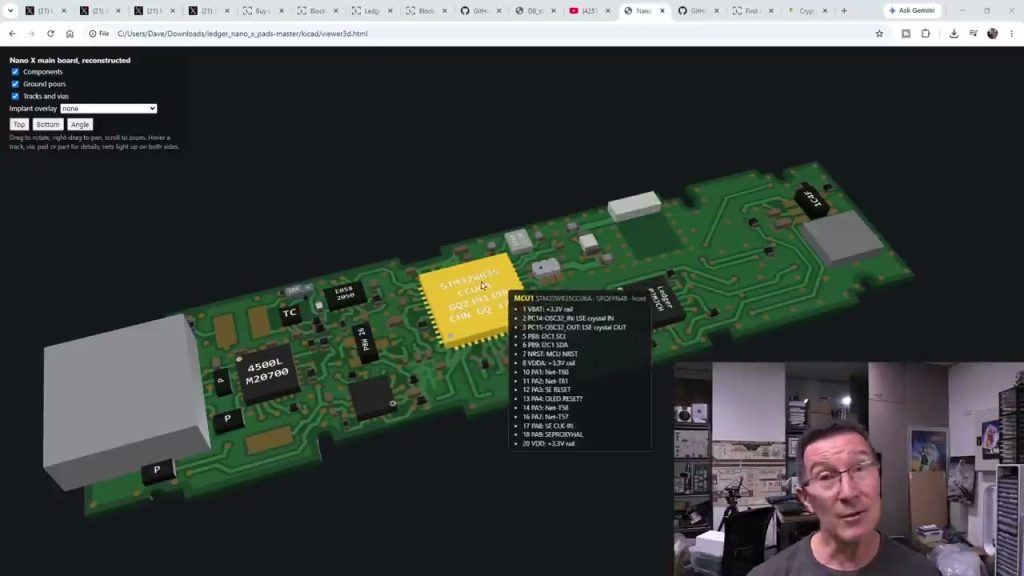
A hardware wallet can have a certified secure chip and still be vulnerable before it reaches its owner. In a new EEVblog video, Dave Jones examines a reported supply-chain attack against the Ledger Nano X, using board-level diagrams to explain where an added implant could connect and why the surrounding PCB matters as much as the secure element itself.
The 32-minute breakdown moves from the wallet’s architecture to a reconstruction of its circuit board and the alleged attack hardware. Jones distinguishes the protection offered by a secure microcontroller from the less-protected signals and traces around it. His practical discussion covers exposed routing, package selection and potting compound, while noting that physical-access threats extend beyond cryptocurrency wallets to payment terminals and ATMs.
The useful takeaway for electronics builders is the threat model: a secure part cannot automatically authenticate every component, trace or step in a device’s journey to the user. The video is an explanation of the reported attack, not a claim that every Nano X is compromised. Watch EEVblog’s full analysis on YouTube.